
 Tiếng Việt
Carton Sealer – Structure and Operating Principle
A carton sealer (also known as a carton taping machine) is a specialized packaging equipment designed to seal the sides of cardboard boxes using adhesive tape in an automatic or semi-automatic manner.
This article provides a comprehensive overview of the structure and operating principle of carton sealers, along with the practical benefits this machine brings to business operations.
What is a Carton Sealer?
Carton Sealer (or carton taping machine) is an automatic or semi-automatic packaging machine designed specifically to seal the surfaces of cardboard boxes with adhesive tape.
Instead of relying on time-consuming manual taping that often leads to folded edges or misalignments, a carton sealer automatically folds the flaps and applies adhesive tape with precise, uniform pressure.
Popular Types of Carton Sealers Today
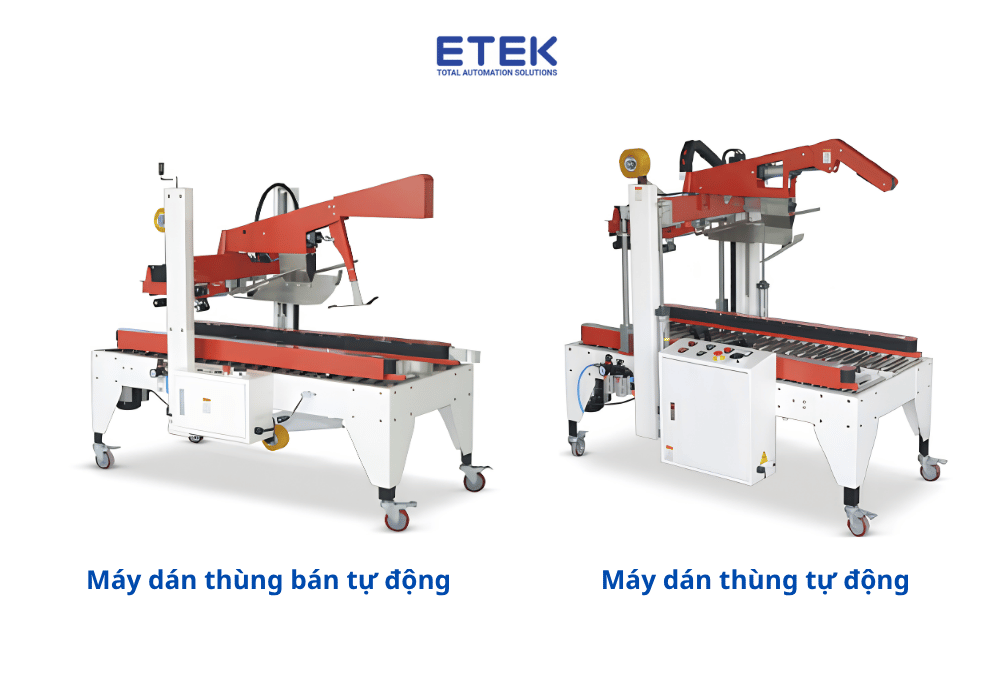
- Semi-automatic Carton Sealer: Requires the operator to fold the top four flaps of the box before feeding it into the machine, or automatically seals the top and bottom sides for fixed box dimensions.
- Automatic Carton Sealer: Automatically adjusts to the box dimensions (height and width), folds the flaps, and applies tape without human intervention.
Benefits of Carton Sealers in Industrial Production
The introduction of carton taping machines has overcome the limitations of traditional manual packaging methods:
Optimizing Packaging Productivity
A standard carton sealer can process 10 to 30 cartons per minute (equivalent to 600–1,800 cartons per hour), which is 5 to 8 times faster than manual taping. This enables businesses to handle large volume orders within tight deadlines.
Saving Operational and Labor Costs
By automating the process, businesses can reduce 2 to 4 operators at the end-of-line packaging stage. Additionally, the machine controls the exact length of tape applied, eliminating material waste caused by over-taping or improper cutting.
Enhancing Professional Aesthetics
Cartons sealed by machine feature straight, smooth tape lines without wrinkles or breaks. Visually appealing packaging elevates brand reputation in the eyes of partners and customers.
Protecting Goods During Transit
The pressure applied by the machine’s press rollers ensures the tape adheres tightly to the cardboard surface, creating a tight seal along all box edges. This protects the internal goods from dust and moisture while minimizing loss, tampering, or theft during storage and transportation.
Structure of a Carton Sealer
To ensure durable and accurate operation, a carton sealer integrates mechanical components with an intelligent drive system:
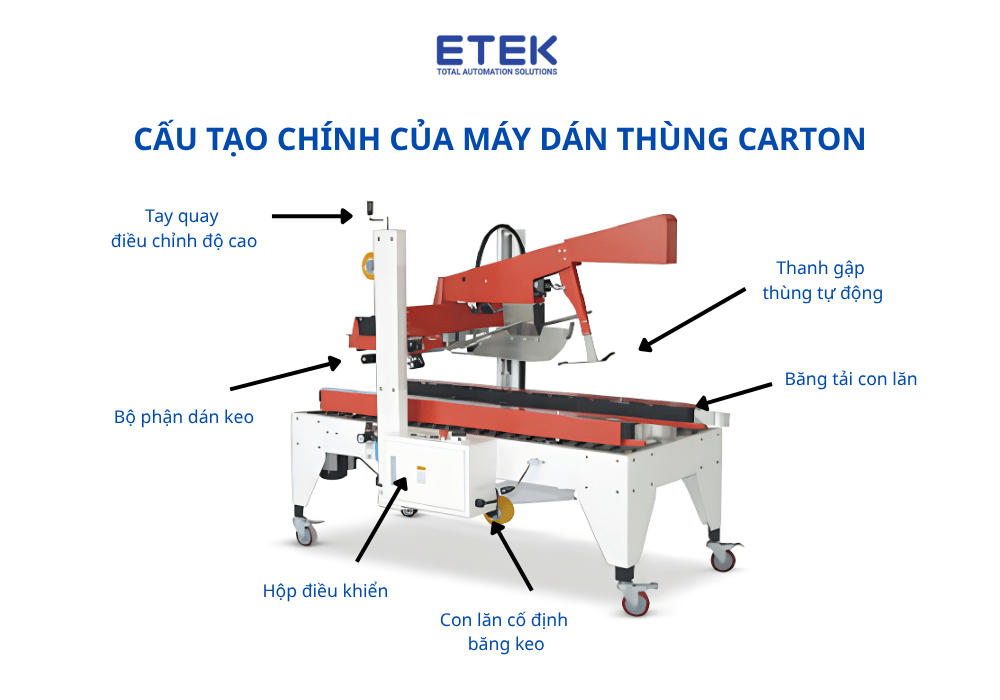
- Machine Frame: Constructed from sturdy, heavy-duty materials to stabilize internal components and minimize noise and vibration.
- Conveyor Belts (Side/Top Belts): Pull and guide the carton smoothly through the taping area. This drive mechanism keeps the box on track, preventing skewing without human assistance.
- Motor: Supplies the driving power for both the conveyor system and the taping mechanism. A robust motor ensures continuous, high-volume production demands are met daily.
- Tape Press Rollers: Apply mechanical pressure to flatten the tape upon contact with the box surface. This component completely eliminates air bubbles and wrinkles, creating a smooth and secure seal.
- Cutting Blade: Automatically cuts the tape to the preset length, saving materials and delivering a neat package.
- Height Adjustment Crank: Allows operators to easily raise or lower the taping head to match the height of different box sizes, accommodating diverse packaging needs.
- Control Panel: Features an intuitive design with main switches and an emergency stop button, ensuring quick and safe operation.
- Photoelectric Sensor (Automatic Models): Detects incoming cartons and sends signals to the control system to trigger the taping cycle automatically.
Operating Principle of a Carton Sealer
- Carton Preparation: After items are loaded into the carton, the operator folds the top flaps and places the box squarely at the machine’s infeed station.
- Box Positioning and Feeding: Side drive belts gently grip both sides of the carton to pull it inward. Guide rollers keep the box traveling in a straight line without tilting. On automatic models, optical sensors detect the box and prepare to initiate taping.
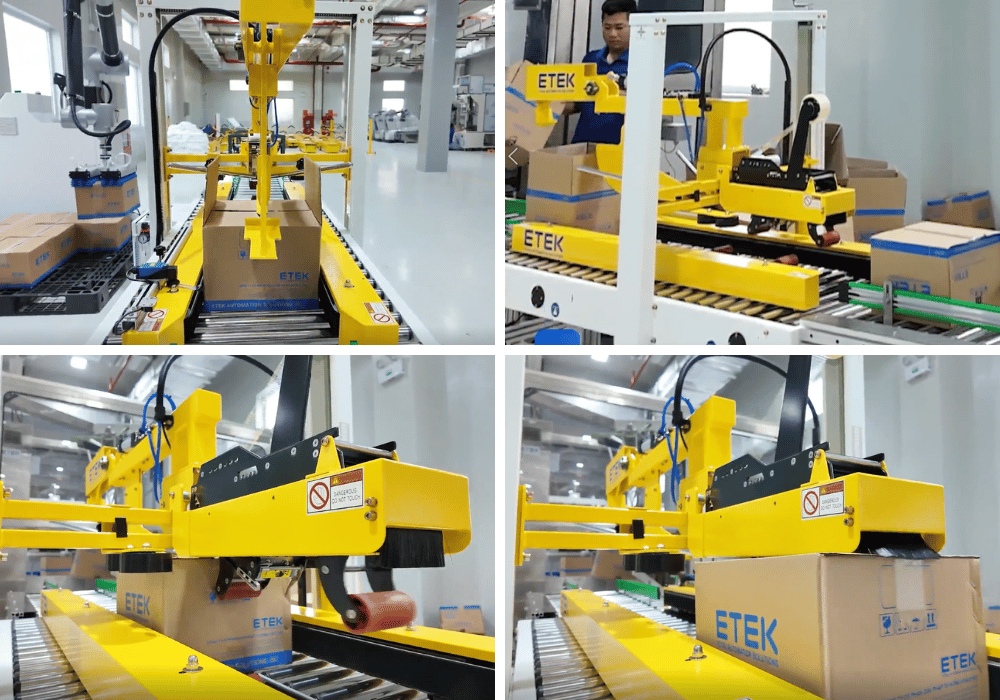
- Taping, Rolling, and Cutting: The tape head dispenses tape along the seam of the folded flaps. Immediately following, rubber rollers press the tape down firmly to adhere it to the cardboard surface. Once the full length of the box is taped, an automatic blade cleanly cuts the tape.
- Discharge and Completion: The conveyor pushes the fully sealed carton out to the discharge area, where it is ready for robotic palletizing or shipping. Depending on box size, this entire process takes only 2 to 5 seconds per carton.
Applications of Carton Sealers in Manufacturing
- Thanks to their high efficiency and versatility, carton sealers are widely used across various modern industries:
- Food & Beverage: Packaging confectionery, instant noodles, canned goods, beverages, and dairy products demanding high hygiene and processing speed.
- Pharmaceuticals & Cosmetics: Protecting medicines, dietary supplements, and premium cosmetics from environmental exposure.
- Electrical & Electronics: Packaging home appliances, electronic components, mobile devices, and computers that require secure stabilization for long-distance transport.
- Logistics & E-commerce: Fulfilling thousands of orders daily across distribution centers.
- Textiles & Garments: Packaging apparel and footwear for international export.
Where to Buy Reliable, High-Quality Carton Sealers?
Criteria for Choosing a Carton Sealer
- Define Packaging Needs: What is your daily output requirement? Are box sizes fixed or constantly changing? Answering these questions guides you toward a cost-effective semi-automatic model or a high-speed automatic unit.
- Quality of Components: Prioritize machines built with heavy-duty frames and electrical/sensor components from trusted brands to reduce downtime and maintenance issues.
- Consulting & Line Integration Capabilities: The supplier should be able to conduct on-site surveys, recommend space-appropriate equipment, and integrate the sealer into existing packaging lines (e.g., strapping machines, palletizing robots).
- After-Sales Service & Warranty: Select suppliers offering readily available spare parts, experienced technical teams for installation, and rapid on-site troubleshooting and maintenance.
- ETEK – Trusted Provider of Carton Sealers in Vietnam
If you are looking for high-quality carton sealers and comprehensive packaging solutions, ETEK Automation Solutions Joint Stock Company is a leading choice trusted by thousands of factories and enterprises.
As a pioneer in industrial automation in Vietnam, ETEK goes beyond equipment sales to deliver tailored production optimization solutions for every client.
Contact ETEK today for expert consultation and the most optimal carton sealer quote for your facility!